Classic Albums: The Wild, The Innocent, and The E Street Shuffle (1973)

I saw rock ‘n’ roll’s future—and its name is Bruce Springsteen

On August 25th, 1975Bruce Springsteen’s musical career changed forever. Born to Run was a triumph of encapsulating the motifs of the American Dream, the hope of the future versus the world weary reality, the desire to make something out of nothing and never look back, audiences took to it immediately and a star was born.  Many thought that this Jersey boy had come out of nowhere (he had) and that this was a stunning debut (it wasn’t).  The genius of Born to Run lay in its absolute desperation, it’s all or nothing grandeur that was indeed the result of an artist taking his last shot at stardom, doomed to fade to obscurity if he failed.  The tales that came out of this recording were legendary, it took two years to make the album, with a good 6 months spent on the title track, complete with 12 guitar overdubs and a change in production and management halfway through.  The guitar slinger from Jersey had finally found critical and popular success, yet Springsteen had already touched upon the themes so heralded in Born to Run, and it was The Wild, The Innocent and the E Street Shuffle that had brought him there.

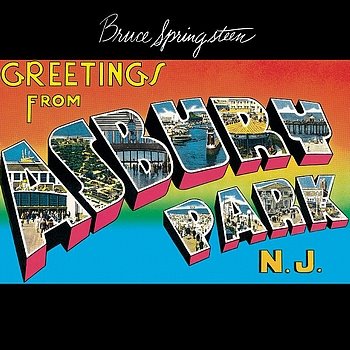
Music talent scout John Hammond had found the young man from Jersey 3 years prior, in the midst of Columbia Record’s desperate search for a “new Bob Dylan” and immediately set about releasing a debut record which would be entitled Greetings from Asbury Park, N.J. only to have it fall on deaf ears, despite its critical success.  Part of the problem lay in the label’s handling of Bruce Springsteen’s talent, they wanted it to be a solo effort, while Springsteen wanted a full band effort. The result was a split down the middle, and it was clear that Springsteen flourished more with a fleshed out sound, the two full acoustic numbers “Mary, Queen of Arkansas” and “The Angel” are probably among the most dispassionate releases in Springsteen’s catalogue and out of place among the Technicolor musical lyricism that brought numbers “Blinded By The Light” and “It’s Hard To Be A Saint in the City” to life.  "The New Bob Dylan" couldn’t have seemed like a worse label, Dylan had made his craft with confessional poetry and folk.  Springsteen seemed more like the nighthawks and the beatniks, choosing his prose to illustrate characters and crafting novellas, not narratives. Undeterred by the pressure of his label, and perhaps even more motivated by his lack of success, Springsteen would enter into the studio again and in a matter of months come out with his most vivacious release in his career, The Wild, The Innocent and The E Street Shuffle.

What makes The Wild, The Innocent and The E Street Shuffle such an interesting case study is it’s a combination of the  joys of youth and the recognition of its mortality.  Never again would Springsteen show as much youthful swagger and intensity as he would here. Even more, it’s a concept album, never again would the joy, the doubt, the passion and anger of one’s teenage years play out so well on a record.

The E Street Shuffle

It all begins with “The E Street Shuffle”.  Imagine the black of a movie screen right before it bursts into color. Its truly a block party come to life with funky clavinets, swaggering horns and character names straight out of film noir. In many ways “Shuffle” is a precursor to “Tenth Avenue Freeze-out, Power Thirteen equal to Bad Scooter, both searching for their groove. Everybody form a line indeed.

4th of July, Asbury Park (Sandy)

“4th of July, Asbury Park (Sandy)” is a gorgeous ballad that follows, shedding a light on the influence for the album title. The Wild, The Innocent was a movie that shared Springsteen’s theme of naive adolescents striving towards adulthood, moving from a small town to the city.  It’s no coincidence that the character shift takes place during a party held during the 4th of July. And the actress playing Rosalie? None other than Sandra Dee.

Kitty’s Back

Lust could be a more apt title for the jazzy and energetic “Kitty’s Back”. Bruce’s guitar screams passion, while the horns and jazzy organ and propulsive drum-work all collide in a kaleidoscopic frenzy that would fall apart under a lesser band, but the dynamic’s here are top notch and the music really illustrates the hopelessness of the narrator to his situation when he croons “Oh, what can I do?”

Wild Billy’s Circus Story

There’s an abrupt change of pace with “Wild Billy’s Circus Story” where Bruce tries to put on his best Bob Dylan cap.  I think it was a mis-step to open the song with a tuba, it was sure to scare off most people at the beginning of the song which is a shame, because “Wild Billy’s Circus Story” turns into one of Springsteen’s better narratives and one that would be much more appreciated in the hands of someone like Tom Waits. The choice of setting is no coincidence either, the circus is a crossroads of innocence and adulthood, separated merely by the workers and the watchers,and I think that’s what Springsteen was going for here.

Incident on 57th Street

Few songs in Springsteen’s catalogue can match the pure beauty of “Incident on 57th Street”. The intro is a delicate ballet of piano and electric guitar that tip-toes back and forth before bursting to life, foreshadowing the dance the doomed characters of Spanish Johnny and Puerto Rican Jane. There’s so many good lines here and all the bluster and romanticism coupled with the stasis and desire to make something that comes with growing up is packed into this almost 8:00 song, even the backing harmonies (which you rarely hear on a Springsteen number) are beautiful. And then like a dream, the piano drifts back into the frame, setting the stage for one of the most legendary Springsteen songs ever.

Rosalita (Come Out Tonight)

Music can barely contain the feeling that comes with “Rosalita (Come Out Tonight)”, you know that it’s just going to be packed with energy from the beginning. The music is the soundtrack to all the best nights you’ve ever had rolled into one, propelled at such a break-neck speed that it’s utterly baffling to imagine how this band contained it. Can you just imagine being in the studio for this? It’s more than lust as the narrator says “Baby, you’re my strong desire” though the sexual notes in the song are a strong influence. Case in point “blind-man’s bluff is a little baby’s game” could easily be interpreted as such that the amateur fooling around of teenagers (the game is about one being blindfolded trying to touch people) is no longer enough to satisfy. In fact, I think that is the point. Sexual rebellion plain and simple, but rarely has the musical interpretation seemed more fun than the  activity itself.  It’s also interesting to note that Springsteen takes a line from Vergil here, “Someday we’ll look back and it will all seem funny” effectively equating the foundation of Rome with sexual liberty.

New York City Serenade

The last song “New York City Serenade” is both a fitting ode to New York City and a swan song to one of the E Street Band’s founding members, David Sancious, the pianist who puts on a dazzling display in the intro to this song, ranging from jazz blues to classical and back before teaming up with Bruce’s acoustic guitar in a heartbreaking duet. The narrative fleshes out a young man Billy, as his transformation from naive youth to young adult takes hold. Life, like New York City, the narrator says “is a mad dog’s promenade, so walk tall, or don’t walk at all”.  The arrangement is dazzling, with sounds of the city and changes all over the place and it’s a fitting goodbye to youth. “Save your notes, don’t spend them on the blues boy”

So why did I choose this album?

Too often, the myth of Bruce Springsteen begins “After two critically acclaimed but commercially unpopular albums…..” and while that may be true in popular acclaim, The Wild, The Innocent, and The E Street Shuffle is a fantastic album and full of everything that made Bruce Springsteen a talent for the ages. While it might not have had the grandeur of Born To Run it is a much more authentic portrait of the odyssey of youth breaking into adulthood, the yearning, the romanticism, the sexual desire, nothing is glossed over here. Not to mention the arrangements on all of the songs here are fantastic and it brings up a fascinating what if? What if this album had been successful? After The Wild, The Innocent, and The E Street Shuffle Springsteen’s arrangements would never go for this vivid approach. Springsteen is one of the few artists that got less complex in musicianship from his debut onward.  The E Street band here is in top form and while it doesn’t feature the bombast that would be their key signature on later albums, they show a clear mastery of musicianship that doesn’t rely on studio trickery.  Not to mention Springsteen was a youthful 23 at the time, playing beyond his years.

It’s truly a fascinating album, Springsteen’s influences are ripe here, with the wordplay of Pulp novels and West Side Story, the switchblade knives and ne’er do well youths, the films of the 50s and the blinding romanticism of there will be something better while looking back. There’s nothing else quite like it on any other musical album.

Top Picks:
The E Street Shuffle- Bruce Springsteen
Incident on 57th Street- Bruce Springsteen

Rosalita (Come Out Tonight)- Bruce Springsteen

McCartney; In Which One Beatle Became One Man, Reviewed (1970)

The heart can be a horrible thing. Horrible in that it dissuades logic and reason and throws irrationality to the fore, and in 1970, the weaker strains of the heart were all The Beatles had left.

THE END OF LEGENDS

The narrative for the eventual Beatle break-up has two well-trodden beginnings: the death of Brian Epstein and the emergence of Yoko Ono –  with neither one placing blame on The Beatles themselves. In the ashes of the break-up such thought was heresy. The Beatles were musical gods, the Lennon-McCartney partnership etched into musical history. They had saved a generation from the death of Camelot, and no one could believe that the members of the inner circle were capable of their own undoing. Such was the power of The Beatles that individualism could not be deemed the cause. The heart played tricks on The Beatle-loving public, and even as time wore on the blame kept landing on individuals outside of the fabulous foursome.

Even with the lavish attention that was fostered on the quartet, we, the public, only had glimpses of each band member’s desires. Let It Be showed the band under tremendous strain, but we insisted that the arm-twisting of McCartney only be seen as him trying to keep the band together, rather than driving it apart.

Yet The Beatles were four men, and only four men, replete with differing ideas, who had nonetheless worked together well enough to coalesce into a sound that defined an era. Men can only be human, their acts the only thing that becomes immortal.  The Beatles had slipped the reins of being individual members; they were an entity that couldn’t possibly fall victim to human error. Such is the cruelty of the heart. They officially broke up in April of 1970, but their identity would forever linger, a ghost that would haunt their individual lives and careers as long as teach had a mortal coil.

OUT OF THE ASHES

It is difficult to imagine the immense struggle they must have faced. There was, after all, no historical precedent: entertainers before had only to live up to the ghosts of their own creations, not the collective creation of a band that benefitted from their own surroundings, that had adapted so well to the ever-shifting culture, that had seared an indelible mark on everything around them.  What mere mortal, thrown from the ivory towers of the gods, could survive becoming, once again, earth-bound?”

Paul McCartney was such a man. No doubt the rift had caused considerable depression, much of it evident in his last numbers with the group that had launched him into stardom: “Oh Darling,” “Two of Us,” “The Long and Winding Road,” – even “Let It Be” spoke of the pain, the guilt, the remorse, remembrance, and refuge that McCartney sought in his creative world, as his reality crumbled beneath him. McCartney was also a driven man; his desire to be adored and remembered, the vices of lesser ilk, would propel him once again to reshape his own identity out of the ashes.

At their death knell, The Beatles were a group of prodigious production. Having long tired of touring, they had made the studio their religion as they endlessly tried to improve upon current techniques, to stretch the limits of what was possible. The end results were their own idols, golden images that reflected their drive and ability.

McCartney would be, could only be the exact opposite. Abbey Road was not yet a year old, and as their ultimate product it might have been their best – no single overdub out of place, no piece over-produced, the sound destined to live on beyond its own creators, god-like.

Of the Four, none could be better suited for the challenge than Paul McCartney. His father a jazz musician, McCartney’s ear for melody and ability with instruments was unmatched in the group. It was he who showed the most interest in production and had the greatest knack for it. (One example is the geese-like sound that floats above “Tomorrow Never Knows,” which was the end product of McCartney recording himself laughing and messing with the tape loops.)

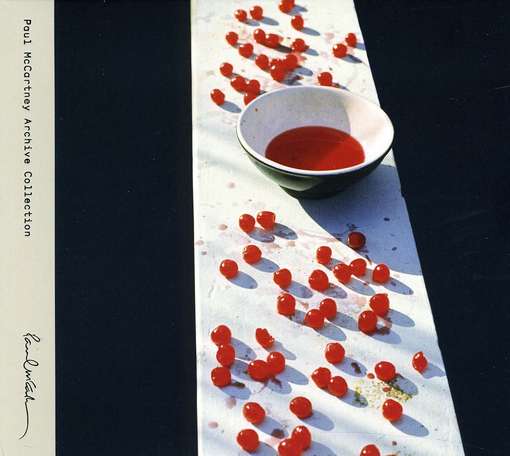
Dismayed with the Let It Be sessions, McCartney retreated to his home to record something “back to basics,” armed only with the instruments he owned and the 4-track recorder that he kept in his living room. At the start he was a Beatle, but when he released the finished product, he ran it with a press release that announced his tenure with the group was over.

The Lovely Linda

The album begins with the man in love. “The Lovely Linda” is a little acoustic jaunt that was recorded in McCartney’s living room. The high pitched squeak is actually the sound of the living room door being opened by Linda herself and although its a fragment, it builds the foundation for the theme of the album; ramshackle, intimate, and off the cuff.  McCartney didn’t give a damn, he just wanted to see what he could do on his own

That Would Be Something

“That Would Be Something” is really where McCartney takes off. The song starts with a lone bluesy guitar riff that manages both to reflect McCartney’s situation and show off his musical talent, filling out with both acoustic and vocal percussion and some smooth bass work. But it’s McCartney’s Elvis-like croon that steals the show. Having had to live under the constant pressure of innovating while in The Beatles, McCartney’s reverence for the older styles really shows in this laid back performance.

Valentine’s Day

And then comes the wordless “Valentine’s Day,” a succinct jam under 2 minutes that if anything proves McCartney’s talent with melody. Not a single other Beatle could have gotten away with not using his voice and “Valentine’s Day” is aware of that: its guitar caustic and biting, the drumming rapid, a kiss-off to the other members as if to say, “Well look what I can do, even without you.”

Every Night

McCartney, even in his Beatle years, rarely sang in the first person, which is a shame, because he’s quite good at it. “Every Night” might be the best song on the album (if it weren’t for a little thing called “Junk” and “Maybe I’m Amazed”). Truly a portrait of himself at the time, it’s quite lyrically clever that McCartney makes the point that he wants to escape the ‘every nights,’ for the singular moments where he’s just with the one he loves. As a little kid I was enthralled with this arrangement, the off-beat boom hiccup of the snare and that wordless refrain driving the point home and making it one of McCartney’s most endearing and independent songs on record.

Hot As Sun/Glasses

“Hot As Sun/ Glasses” marks an interesting point in the album; it’s another instrumental and again as melodic as anything McCartney ever made, and it’s a great homage to the classic fifties progressions (think Buddy Holly) as well as a quick foray into new sounds (that summery organ), John Cage (the classical dissonance), and musique-concrete (the snippet of “Suicide” – a demo he left off the album).

Junk

McCartney has a gift with acoustic guitars; intertwined with his voice, they become him when he’s at his most wistful (see  "Yesterday,“ "Blackbird,” “Her Majesty,” “Mother Nature’s Son,” “I Will,” even as far back as “I’ll Follow The Sun”), and no example might be more powerful than “Junk.” The song that might as well have instigated Elliot Smith’s whole career it’s a beautiful piece of McCartney’s third person story telling that manages to make even the blandest objects alive and heart wrenching.  Only (fittingly) Rogers and Hammerstein ever made ordinary things as equally charming in “My Favorite Things.” Even before the chorus, just in the way McCartney gently lulls “Motor cars, Handle Bars, Bicycles for two,” you sense the immediate sadness, the forlorn nature of these objects without mentioning another word. Such is the power of McCartney’s music.

Man We Was Lonely

The next number might be the most jaunty and uplifting of the whole album. “Man We Was Lonely” begins with a beautiful intro that sounds eerily close to the chord progression Lennon himself would use on his ruminating “Love.” The way the melody melts into the chords, and even Linda’s vocals (long a point of contention among solo McCartney apologists) are put to good use here. McCartney’s vocal talent is on display too, using two very different takes to juxtapose past and present, reminiscence and moving on.

Oo You

If it weren’t for McCartney’s unmistakable voice, in the context of todays music, you could sneak “That Would Be Something” and this next number “Oo You” onto a White Stripes –  maybe even early Black Keys –  compilation and people wouldn’t know the difference. It’s a connection that doesn’t strike right away, but it becomes obvious when put to light. Listen to how McCartney plays the guitar part, even the sound: isolated, instantly bluesy, and referential to the old Delta blues players that came before him. In describing McCartney’s ability to be the everyman and play all the instruments, an assumption is made that he can’t be exceptional at all or any of them, but he is.

Momma Miss America

It is with little warning that McCartney comes back to roughshod roots; the rollicking “Momma Miss America” is a bouncy instrumental. McCartney has never tried to set the world on fire with lyrical wordplay; rahter, these musical sketches are a more fitting portrait. His mission was never to enlighten, never overwrought with messages (both of which would befall Lennon and Harrison) but he sought to lighten, to engage the listener with the joy of the music itself. One can find many examples of simple toss-off lyrics in McCartney’s career, but there are few examples of melodies that don’t grab your attention.

Teddy Boy

If this album is to have a dud, it would be “Teddy Boy,” but even this is a prime example of the above. Listen to the song just once and try not to hum the melody, and even with that caveat, it’s not a bad song; the touches in production help as well, with the subtle backing harmonies, the soft patter of the drums, the ad-lib ending. It’s a nice little harmless tune and that’s all it was meant to be.

Sing Along Junk

“Sing Along Junk” shows just how pure a melody “Junk” was. Even without the lyrics this (admittedly more produced) version puts the words in your head with the guitar alone, but it’s nice to hear the piano and guitar bounce the melody back and forth.

Maybe I’m Amazed

Out of the depths, we find McCartney at his most ragged on the beautiful “Maybe I’m Amazed,” his voice hoarse and pleading, the vocals both universal and intimate, and that guitar hook one for the ages. Few times have we seen the man as barely composed as he plays here, every shred of his soul put into every instrument, and its a nice touch that this song could be both about a friend and a lover (as it probably was). The way the arrangement builds is cinematic and personally reflective, the piano transforms from a sad waltz to a rock and roll pounding, the guitars plead and choke, and the drums go back and forth from put together to off-kilter. It’s the song that would come to define the album, despite the difference in sound.

Kreen-Akrore

“Kreen-Akrore” is a highly unusual number for any version of McCartney, Beatle or otherwise.  To start, it’s percussion-based, and the groove starts out in a New Orleans fashion before some left-field production elements join the fray, and then a McCartney drum solo! It’s not all bad stuff. In fact the Beach-Boys-meets-Indian drone harmonies make quite an interesting draw midway through. It’s just so singularly unique in McCartney’s catalogue, too far ahead of its time.

McCartney managed to do the impossible: it took a God and made him a man, humanized him, and defined his sound.  Nothing on the album sounds like it could have fit on a Beatles record, and yet it’s a welcome idea. While All Things Must Pass and Plastic Ono Band had better critical response, McCartney is the underrated winner of the bunch. Harrison’s All Things becomes too self-aggrandizing, and its production often mires the good songs that are on it, while Lennon’s Plastic Ono Band  is almost too honest and caustic to listen to in one sitting.

McCartney found his calling in creating music that soothes, and an album that can be played from start to finish without wearing out its welcome. Ram will still be my favorite solo album of his, where he took all the best little bits from McCartney and put it into a finished product, but no other product in The Beatles catalog, solo or otherwise, quite reaches the comfort and charm of this one.

It’s also a highly influential record, you can see where Elliot Smith and Jack White found their bearings from McCartney, and even with its lo-fi aesthetic (barring “Maybe I’m Amazed”)  it’s a highly ambitious (and successful, reaching #2 in 1970) record. McCartney combines the man behind the music with the power of his music (and a bevy of styles and influences from old time blues to musique-concrete), assuring that even in the ashes of the greatest pop group of all time, there was music to be made.


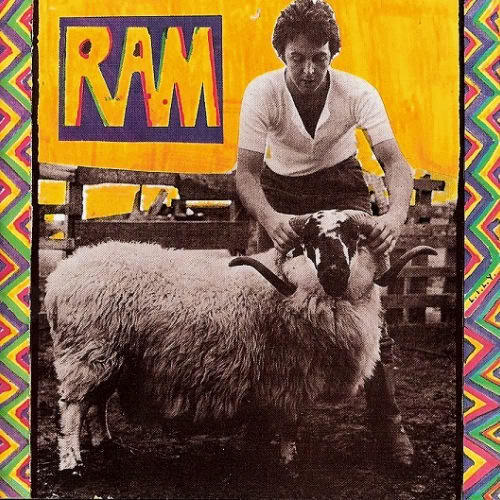
Classic Album Series: Ram, Paul McCartney (1971)

While it is common fact that Paul McCartney officially called the Beatles quits in the spring of 1970, most people don’t realize the immense struggle it put McCartney through.  While Lennon, Harrison, and Starr went on with solo careers with the vigor of free men, it was McCartney who seemed to suffer.  This struggle was rampant through his songwriting of the time; usually a songwriter who prided on third person narratives and story-telling, McCartney was  writing about something completely new, himself.  “Two Of Us”, “Let It Be”,  “The Long and Winding Road”, “Carry That Weight”, even perhaps “Oh Darling"  are all not only skilled love songs and some of his best material, but they also reflect a man troubled on the inside.  McCartney, his eponymous debut still showed the scars of this massive breakup, with "Maybe I’m Amazed” and “Junk” both showing the man with his heart on his sleeve, and the ragged production not only a sign of his talent but perhaps his mood at the time.

However, McCartney is too much of a showman, and too much of an immense talent to let such things bother him for long, although his writing partner was perhaps more famed for his fight for the working class, it was McCartney who had really come from one, and thus this hardship was almost a challenge for him to do better.  Music never seemed to be the issue, McCartney’s appreciation for music was only eclipsed by his talent for it, and of his previous band’s members, he was the most well rounded.  Yet this was an unknown commodity of the time, it was a scarce few people who knew that he had played drums on numbers such as “Back in the U.S.S.R.” and “Dear Prudence” as well as lead guitar on songs such as “Taxman”, “Good Morning, Good Morning” and the like.  Many musicians who have met the man in fact will attest that he is a guitarist of prodigious skill, and only limited by his choice to play bass.

So McCartney set about recording Ram in late 1970 and finished in March of 1971.  It had been recorded partly in McCartney’s home studio in Scotland, and it was finished in New York.  This accounted for the intriguing overall soundscape of the record, it wasn’t quite polished, but it wasn’t as ramshackle as its predecessor, McCartney, had been.  The inclusion of a formal studio led McCartney’s whimsical and homespun melodies to get full production treatment, and let his vision be un-compromised in scope.

Critics, hungry for the sound of his former band, were very harsh at first with the overall consensus being that it was full of whimsy but not much else.  However as time played its course, many began to find new insight into Paul McCartney’s second album, some even called it the first indie record, a label which given the range of styles found on the record, seems rather fitting.  The album, track by track, after the jump.

1. Too Many People

“Too Many People” would start the album, a rather scathing number with biting acoustic guitars and lyrics (admittedly) directed at John Lennon stating among other things “too many people preaching practices” and “you took your lucky break and broke it in two”.  The production is effortlessly organic with great harmonies and acoustic instruments and the stinging solo at the end is worth the wait.

2. 3 Legs

“3 Legs” is at the base, an acoustic delta blues styled number, with the production values held in check to emulate recordings of the era. Despite the warmth of the song, the interpretations vary from being a diatribe about the end of his former band, to just an attack on John Lennon himself.  Yet the real genius is how authentic Paul McCartney sounds by way of the blues.

3. Ram On

“Ram On” is a number that is an example of McCartney’s pure melodic talents, in a wistful dreamy number similar in style to his contemporary Brian Wilson.  Looking back now, it almost seems like a direct ancestor of today’s indie lo-fi, an intriguing arrangement that captures the listener’s attention in both its meticulous beauty and off the cuff production, clocking in at 2:26, there is hardly any number in McCartney’s catalog that approaches this profound perfection.

4. Dear Boy

“Dear Boy” continues the sentiments of “Too Many People” with a beautiful vocal arrangement and great melody led by a striking piano chord structure.  If critics are to be believed in assessing Linda McCartney’s vocal talent (or lack thereof) then it is a testament to McCartney’s skill as a producer that her backing vocals are top notch.

5. Uncle Albert/Admiral Halsey

“Uncle Albert/ Admiral Halsey” stands as a perfect example of McCartney’s good and bad.  Critics will say this song typifies McCartney’s lackadaisical lyricism, but will also say it showcases his amazing melodic ability.  The transition is perfect, and the arrangement (with George Martin’s help) is awe-inspiring in its beauty.  The storm (recorded on the edge of a cliff in Scotland) is a perfect unexpected touch, and the suite of melodies stands among McCartney’s best.  The guitars alone bring to mind at times The Police (Hole in My Life) and Dire Straits (the lead guitar throughout Admiral Hasley). It’s content is ridiculous, but it’s never trying to be serious.

6. Smile Away

“Smile Away” is a straight out raunchy rock number, showcasing McCartney’s ability as an all around musician with some great rhythm and lead guitar interplay along with drumming as well as a great rough vocal.  It’s admittedly a throwaway number, yet again McCartney’s talent with melody makes it worth repeated listens.

7. Heart Of The Country

“Heart of the Country” features a warm organic rootsy arrangement with Paul McCartney at the top of his vocal register mimicked by an impressive acoustic lead guitar.  The real star of this show however is the bass line, a bouncing chromatic groove that matches the feel of the music perfectly.

8. Monkberry Moon Delight

“Monkberry Moon Delight” is pure nonsense, like someone took the wrong turn out of “I Am the Walrus”.  Despite sounding like being on the wrong end of an acid trip, McCartney’s gruff vocals are quite impressive and the melody is catchy despite how much the lyrics try to throw you off. It’s simply just good rollicking fun.

9. Eat At Home

“Eat at Home” is a tongue-in-cheek sex themed number that features some of the best guitar lines this side of Pink Floyd’s Dark Side of the Moon.

10. Long Haired Lady

“Long Haired Lady” starts with an admittedly horrid intro, but the arrangements constant development makes it one of the more interesting songs on the entire album.  Great vocals, great guitar, and a rather interesting breakdown around the 2:20 mark make this song worthwhile.

11. Ram On (Reprise)

“Ram On (Reprise)” in just 55 short seconds, makes you just want to go right back to that part of the album, just perfect placement.

12. Back Seat Of My Car

“Back Seat of My Car” would close out the traditional album, a beautiful Beach Boys styled number, with all the harmonies provided by McCartney himself, and a much more produced, though still quite disarmingly beautiful and charming, arrangement.

Bonus:

13. Another Day (Single)

“Another Day” was initially recorded to be on the album, but due to marketing strategy at the time, was released before the album as a single.  The song is among the best McCartney would ever write Beatles or not, the arrangement, bass, lyrics, and vocals are all top-notch, a beautifully sad tale of the eventual breakdown of the titular character.

And thus, in a little over 44 minutes, Ram was over.  The album has stood the test of time and is perhaps McCartney’s finest album, it finds him with unfiltered, and unprecedented control of the studio, giving him the full artistic vision he wanted and he did not disappoint.  In many ways it is a precursor to the indie music genre and rather brilliantly captures McCartney at a time where he had something to prove, where he was hurting, and showcases his innate musical ability that made him so successful throughout his career. 

Because there’s nothing in there that should warrant that statement a compliment. Music, no matter the innovations along with it, at its base has to be music.  Sure, there is always a context where music can be made to sound smart or have a message, but never should that be at a sacrifice to melody, or harmony, and never should it come to a point where the music world is so fractured that this becomes one of the most sought after LP’s in 2012.  Yes, Frank Zappa was weird, most of his music irredeemable by everyone but the smallest circles of music junkies who appreciated him for his technical skill at his instrument, or at least that he had an idea of song structure.

Here’s my problem; the music is no longer relatable without context, for such a rich medium, sounds like this require a visual accompaniment, or fulfill a background purpose for getting high, to forget the world.  

40 years ago, a musician like Grimes would never even get the chance make a record, let alone play a large festival because her take on melody is worse than those 4 and ½ hours that Jerry Garcia played a solo after taking some bad acid. That’s the problem today, the fact that she’s a woman, dresses odd, and warbles like Skillrex put through a washing machine makes her in vogue.

While she may be talented in the sense of modern music; how did it get to a point where this is what music is?! 

I’m not saying Top 40 is any less deserving of a tongue lashing, but this weird electronic derived stuff seems manufactured as well, metallic, isolated, pill popping depressive sounds that not so much conjure an emotion but make you feel emotionless.