
Best Albums of 2012: Like Wind Blows Fire, Cheers Elephant

image

Label: Self Released/ N/A

Released: May 8th, 2012

Though their first album came out in 2008, the name Cheers Elephant isn’t likely to ring many bells, despite no lack of talent or creativity. I first heard of them through exfm, which had featured Like Wind Blows Fire as one of its many handpicked albums of the week. I immediately fell in love with their seemingly radio-ready “Peoples”, the song that leads off the album with such a strong note that you fear the rest will be a let down.  Yet as the days went by, I found myself hearing more and more of their songs through shuffling the music on my iPod, and being hard pressed to find a song I didn’t like.  Self described as a “raw, rootsy, psychedelic pop rock quartet,” Cheers Elephant really knows how to write a hook, and delivers a gorgeously produced (though not overly so) record that is sure to make listeners wonder how they haven’t heard this on the radio before.

It’s telling of the modern age of music business that Cheers Elephant decided to do it all on their own, self producing their records and selling them through Bandcamp (and iTunes with Cheers Elephant as their label) instead of through a major label (or subsidiary). With fellow bands Dr. Dog and The Roots and Clap Your Hands Say Yeah! to name a few, it’s becoming apparent that Philadelphia has it’s own burgeoning and fruitful music scene.

One of the hallmarks of successful bands nowadays is their ability to sing, especially to harmonize (Fleet Foxes, Bon Iver, Dr. Dog, Mumford & Sons, etc.) which I suppose has been true since rock really began (The Beatles, The Beach Boys, Crosby Stills Nash & Young) and Like Wind Blows Fire is full of them.  And yes, the 60’s comparisons are inevitable, but they’re also inviting, music is much easier to listen to when it’s got a good voice behind it, with phased out guitar solos to boot.  

“Peoples” really does start the album out with tremendous enthusiasm.  Whereas most songs have one hook, “Peoples” is a hook in its entirety. The opening line, the buildup to the chorus, the chorus itself, and the guitar solo/ glockenspielesque piano line that leads the outro are all ear pleasing sonic pleasures of unbridled optimism. And just tell me you don’t hear shades of a happy go lucky Springsteen in the song’s final moments.

“Doin’ It Right” pumps out a rhythm section that would make both Phoenix and The Strokes proud with it’s gleaming guitar riffs, syncopated drums and slinking vocals before bursting into the wide open bridge of Beatle harmonies and Keith Moon drumming on a bender, it’s a tidy little gem of a song that wraps up in under 3:00.

“Falling Out” brings those harmonies out front, with some deliciously weird lyrical non-sequitors like something out of Tommy’s “The Acid Queen” “because the room is completely naked and my teeth are falling out” before a technicolor guitar solo comes out of the woodwork that serves as glorious coda for the songs end.

When John Lennon went into the studio as a Beatle, he often implored George Martin and the recording staff to get an unusual aspect out of the recording, whether he wanted it to “taste like oranges” or “smell the sawdust” or, on “Tomorrow Never Knows”, beg Martin to allow him to be hung upside down on a rope so he could swing around the microphone from above, Lennon wanted an element often forgotten in today’s music, texture.  On “Leaves”,  You can almost chew on those acoustic guitars that play back and forth with the in-the-pocket drums.  Credit Cheers Elephant for entertaining all aspects of a recording; especially on a song as catchy as this one, as the chorus features quite an ear pleasing and tempo changing hook.  Once again, they stick a guitar solo onto the coda though to quite a different result, as the arrangement behind it builds to a cacophony that threatens to overtake it before dropping out again.

“Party On Darwin” on its premise shouldn’t work, with it’s vocal intro and tongue-in-cheek lyrics. Yet it boasts a wordless vocal hook that rivals The Police’s smash “Do Do Do Do, De Da Da Da” but, unlike Sting, is fully in tune with it’s irrelevance. They’re clearly having fun with this one, and it’s to our benefit that they make even the ridiculous sound catchy.

“Get Ya” features some of the best musical interplay on the album, from the rumbling drum intro, to the kaleidoscope of arrangement changes, and it’s a dynamic workout. “Thought And Commonsense” brings back the muscular arrangement of “Doin’ It Right” along with the reason the album has been deemed explicit, with one particular word choice in the lyrics.  On an album this tight, it’s hard to choose favorites, but this would fall among the top tracks of the album,  with the added presence of a horn section, one of the stronger bridges on the album as well as some surprising gender-bending lyrics.

And how about those harmonies on “Little Dog”? Starting out as a rustic acoustic jaunt, this song opens up into Wall of Sound harmonies, and a twist on the love song lyrical staple. It’s really the vocals that are on display here, rivaling Fleet Foxes at their most bombastic, but none of the self-righteousness.

“Like Wind Blows Fire” might be the song I like least on here, but only because it hasn’t tracked up as many listens as the rest of the album. Lyrically, it’s a clever turn of the phrase, expanding on how a liar causes as much harm like wind blowing fire, and there’s some nice studio trickery on here as well.

“Balloon In The City” is the album send off, and quite an artistic music video with it (which you can check out below) but at its heart, it’s the biggest ballad on here, with a catchy acoustic hook and some spacey synthesizer work in the distance and an overall dream-like quality with the warm vocal harmonies that sound like they’re coming from another room. A nice relaxing way to end the album, and on a very strong note.

You might not find Like Wind Blows Fire as a ubiquitous result to many Best of 2012 Album lists, but it just goes to show how much quality music is out there. Cheers Elephant deserves a lot of credit on this one, being a self-release that sounds so professionally produced, and so gorgeously detailed. While they may not have the fame of fellow Philadelphia bands like Dr. Dog, their time is sure to come, and when it does, fans will have a hard time finding a better album of 2012 then the one found here. Why this album didn’t find Top 40 radio play was not for a lack of goods, but a constant reminder that music, as a business, does not always find quality.  So Cheers to Cheers Elephant for putting up the good fight, and producing an album they wanted to produce. For an indie-rock/pop/psych rock / whatever you want to call it album, this is one of the most enjoyable that I’ve heard in a long time.

“Balloon in the City” Video:

Top tracks: 

“Peoples”, “Doin’ It Right”, “Leaves”, “Thought and Commonsense”
 

Grab Like Wind Blows Fire on Bandcamp
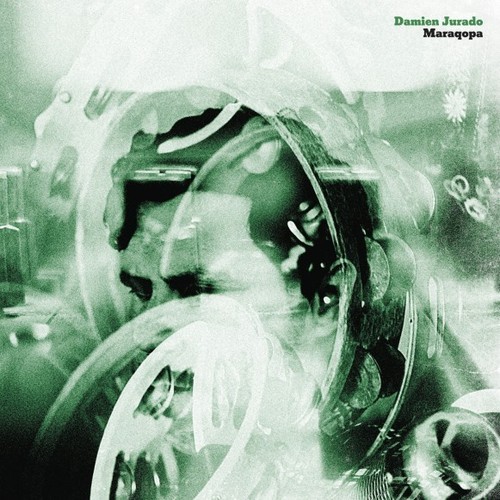
Best Albums of 2012: Maraqopa, Damien Jurado

image

Label: Secretly Canadian

Released: February 21st, 2012

Listen: Museum of Flight, Working Titles

Few albums, let alone albums released this year, could boast the intimate yet grand production found on the temporal and geographical shift of Maraqopa. Though best categorized in the vein of singer-songwriter affairs, Jurado avoids the vogue of plaintive acoustic guitar backed by hushed warbles of narrative reclusion.  There are dashes of psychedelia throughout, from the late night guitar jamming of “Nothing Is The News” to the  guitar/glockenspiel meld of “Reel to Reel” and the overall auspicious use of reverb to create deep, introspective backdrops as a perfect partner to Jurado’s thoughts.  This is not a happy album, though by no means is it maligned to doom and gloom, rather it’s a “mature” album that features some of the best written lyrics of this year.

Take “Working Titles”, derived from the creative jargon for a name not finalized (mostly used in film, but really can be inferred for novels, albums, etc.) or ready for public release.  Jurado’s narrator is in a constant state of flux, from the beautiful opening stanza “You could mess with my life in a poem/ have me divorced by the time of the chorus/ there’s no need to change any sentence/ when you always decide where I go next” arguably one of the better, and more heart-wrenching, kiss off lines of all time.   Another album highlight is “Life Away From The Garden” which features a ghostly call and response between Jurado and a children’s choir (The Swift Family Singers) as it mirrors the abandonment of the Garden of Eden.  To Jurado’s credit, it’s not entirely in the Biblical sense as it is the loss of innocence. The final line “all of us light, all of us free” could be both looking forward and looking back, depending on your world view.

Much has been made of the partnership between Jurado and his producer, Richard Swift, and how Maraqopa is as much its own record as it is a continuation of his 2010 release, Saint Bartlett  but the foremost compliments must go to Jurado for integrating Swift’s production to the best results ( a good example is how George Martin went on to be the producer for America after working with The Beatles to far less results). Alongside his beautiful lyrics, Jurado has a equally affecting voice, a strong masculine warble that is equal parts David Crosby and Neil Young, delivering his words with a mix of sadness and perseverance.

All and all, Maraqopa is a real treat of a record, encapsulating both the intimacy of Damien Jurado as a singer-songwriter, as well as pushing the form forward by taking on intricate arrangements and it’s a welcome addition to the best records released this year.

Album Highlights: “Nothing Is The News”, “Life Away From The Garden”, “Reel to Reel”, “Working Titles”, “So On Nevada”, “Museum of Flight”  

Watch: “Nothing Is The News”
 

Buy:

Secretly Canadian (CD, Digital, Vinyl)

Insound (Vinyl)

iTunes (Digital)      

Best Albums of 2012: Nothing’s Gonna Change The Way You Feel About Me Now, Justin Townes Earle

Best Album: Country Edition

Justin Townes Earle, Nothing’s Gonna Change The Way You Feel About Me Now

Bloodshot Records

Released March 27th, 2012

Perhaps a spur of motivation to take the longest album title throne from Fiona Apple (who still requires more … than a reviewer should ever include in an album title), Justin Townes Earle’s latest album swept in forever ago in March.  After the somewhat celebratory Harlem River Blues, the awkwardly lanky yet sartorially informed Earle had seemed to take a step backwards, locked up a month after the album release for alcohol charges and Harlem River Blues was forgotten by critics as almost punishment for his behavior.

Justin Townes Earle’s latest full length is more than just a mouthful. It’s a freeze-frame in the time of Springsteen and Van Morrison circa 1977: the horns warm, the brightness faded, but not fully gone.

Last time around, Harlem River Blues had produced a half exultant, half sorrowful affair.  But there was hope; there was still daylight, happiness tucked away in its little corners.  Nothing’s Gonna Change The Way You Feel About Me Now is much more reserved in its bright spots, more the music of a man in a sorrowful twilight that just had happiness slip through his fingers, the touch still lingering in his mind, the palpable feel.  While some might read the arrangements henceforth on Nothing as characteristically ambiguous, it’s the biggest show of character Justin Townes Earle has had yet.  He’s much more authentic as a man down on his luck, as a character that’s been forgotten and trod upon. The music reflects that: the muted Memphis soul proving equal accompaniment to Townes Earle’s unmistakable voice, and while the opening half of the album might tread a little too softly, the second half of the album is a beauty to unravel, from “Maria” one of Earle’s sweetest aching sorrows yet, to “Movin’ On” a song with a plucky rhythm that is so convincing at telling the listener Earle is just fine, even if he’s not.

More than anything, Nothing’s Gonna Change The Way You Feel About Me Now is an album about what its like to be a man.

Justin Townes Earle is the kind of man that GQ and Esquire love; the dapper sartorial man, a dapper sartorial man who has words of wisdom to boot. He’s a charming man too, despite his former demons – the alcoholic laced night that left him in jail just weeks after his last album came out. His laugh is infectious; it has that warm and inviting quality, a hint of darkness, kind of like the scotch and whiskey that he’s since sworn off. It warms your heart all the same.

The theme of the record, of the man, of what makes him tick, is honesty.

Earle has a gift for combining personal reference and universal feeling. It’s honesty, and it’s consequences laid bare. “Am I Lonely Tonight” is not only about him being alone, but it delves into the ghosts of his past – an absent father, one who he can only identify with through bits and pieces heard on the radio, the horns half mournful, half comforting as he assesses his condition, skin and bones and 300 miles from the Carolina coast. Here is where we find the ghosts of influences past, the haunted Springsteen on Nebraska, the story-telling of traditional country pulled by the roots through the cracked frozen ground.

Earle pushes forward with “Look The Other Way.” A song that would have made Freud proud, the lyrical narrative could be equally directed toward his mother and his lover, arguing with himself on whether he can make himself a better man when the people he cares about don’t care what he does anymore. It’s the narrative that many have traveled before, those who’ve seen love break in front of their eyes, moved by an imaginary hope that believes you dictate the world around you, that the world doesn’t turn without your slightest movement.

It cuts straight to the bone in a man, on “Nothing’s Gonna Change The Way You Feel About Me Now” the album title track, “It’s a shame babe, nothing that you could do, things change babe, such as my feelings for you.” But its more than just a tell off to a love lost: the plaintive, harrowing honesty to his lyrics do nothing to describe his voice, the way it achingly glides over the words like he’s lived it a million times before. It’s a lonely night of a song, something where only the painful memories and drink can be your lone companion.

“Baby’s Got A Bad Idea” is probably the least effective song on the album. Sure it keeps the up-tempo leaning of “Look The Other Way” but this one seems like he’s just painting by the numbers, a filler, but a good filler for sure.  The stellar backing band saves this one, as Earle’s vocals are more ragged than usual.

I didn’t hear “Maria” first from this album (that distinction would go to the title track, which was released prior) but it’s one of my favorites, and it begins the stellar second side of the album. There’s so much feeling, even in the opening trill of the guitars, and Earle’s vocals are at his most affecting and gifted. He lives the words to the point that in your mind he’s not singing them, it’s your own thoughts. This is the horn section’s shining moment too, pulling off a counter-melody midway through, with the effect that the Memphis sound has never sounded so moody and bright.

Down on the Lower East Side

The intro of “Down on the Lower East Side” is almost startling, but Earle does well here to paint a portrait of the universality of urbanity. It doesn’t matter whether it’s Memphis or Manhattan, men will always be men, and they’ll always find the romanticism of a dimly lit street in the early morning hours, reflected here by a rather lovely solitary trumpet, muted and warm, a comfort in the cold and lonely streets.

“Won’t Be The Last Time” is a change of pace, some would call it plodding, but the hushed arrangement only makes Earle’s delivery that much more honest, that much more humble, and that much more hurt. The music pushes against the slow vocals like the world that is ever slipping from his grasp as his words sound like a man sitting next to you at the bar, removed from their backing, more personal than ever.

Memphis In the Rain

Then, with the chime of a bubbling organ, that Memphis sound is back in “Memphis In The Rain”. The arrangement here is in full swing with some percolating guitars and horn lines that embrace the listener in their southern soul happiness. If Dylan had ever done Memphis, this wouldn’t have been out of place on that record.

Unfortunately, Anna

Following up on his innate ability to mirror the greatest writers in the American Songbook, “Unfortunately, Anna” sounds like a response to the characters of Paul Simon’s “Diamonds on the Soles of Her Shoes” where the bright hope of youth has started to fade, the melody a ghostly echo in his vocals. The sound is that of dying hopes, but it’s a beautiful sadness that seeps through the imagery in this song, and it will probably be the slept on classic of this album, and certainly be held in high regard long after Earle’s career is over. For a man steeped in traditions, this is one of his most timeless songs.

The album closer is the bouncy “Movin’ On”, where Earle’s vocals do a slow dance with the rhythm of the guitars. It’s Earle’s gift that he can be so catchy and so intimate at the same time. It’s the sunshine peaking out after a rainy sleepless night, more of a toe-tapper than the rest of the album, and certainly one of the better songs in his career.

Critics had mixed feelings about the overall sound of this album: some thought that the Memphis sound had been too dulled, that the album was more in stasis than the rest of his work, but I’m among the few that believe that it was an intentional move. Memphis Soul has never sounded so good surrounded by doubt, and the band works as one. Even the upright bass proves to be melodic where the horns disappear, and Earle has never come across more open and humbled, never sounded more like his own man.

There will be those that find this album too honest, too heartbreaking and true to man’s condition that they won’t be able to stand it, but there will be others that relish Justin Townes Earle’s true gift; the storytelling of Springsteen and the honesty and pain of Lennon all rolled into one, the ability to sing out his own demons and connect with the world. The gift and the pain of being a man.
Vocals: 4/5

Lyrics: 4.5/5

Arrangement: 4.5/5

Overall: 

Top Songs: “Maria”, “Down on the Lower East Side”, “Unfortunately, Anna”, “Memphis In the Rain

Thirty-Two Years Ago Today: John Lennon Remembered

John Lennon (October 9th, 1940-December 8th, 1980)

For his years as a member of The Beatles, and the years following his untimely death, John Lennon was unfairly labeled as a god, who only believed in the power of peace, a musician whose voice was timeless, yet constantly tied to his past.  For many, he was the one who stood up to radicalism in “Revolution”, had created a world mantra in “All You Need Is Love”,  defended the struggle of man in “Working Class Hero” and the idea of a better world in “Imagine”. For that alone, his legacy could not be tainted.  

He stood up to the United States in his quest to become a citizen and spoke up against the war-hawk world policy.  He had become a savior to the Baby Boomer generation when his band had crossed the Atlantic following the JFK assassination, and became a martyr seventeen years later when he was shot and killed outside his apartment in New York City.  In that short time span, he released  13 albums as part of The Beatles and 11 on his own (if you wish to include Two Virgins, Life With The Lions, andThe Wedding Album which were one-off projects with Yoko while he was still in The Beatles). His solo output may have never lived up to the expectations his former band left, but there was no doubt he left an impact on many musicians, even today.Though not the most technically skilled musician (that distinction would fall on his co-writing partner, Paul McCartney) his strengths lay in his voice. Few musicians then, and still now, had the ability to write from their own experience and make it universal.  

He understandably had his critics; his divorce from his first wife and the abandonment of his first child were indefensible, his outspoken “We are bigger than Jesus” exposed him more as a brash rock and roller than the statement he intended to make. There was the interactions with fans too, the famous example being the fan who camped outside of John Lennon’s house during the filming of Imagine, where Lennon had to tell him that he wasn’t a saint, a savior, that he wasn’t speaking directly to him personally, but just making the music he wanted to make. It would be wise for us to also remember that fact.  Fans proved to be his undoing too, Mark David Chapman was a deranged man who believed that Lennon was leading people to their death, for which Chapman was “The Catcher in the Rye”.

“It’s hard to be Gandhi or Martin Luther King or to follow them. I don’t admire politicians particularly, I think they’re showbiz people, but people who put their thing on the line, like Gandhi, and threw the British out by not shooting anybody… those are the political people I admire. But I don’t want to be shot for it like Gandhi, and I don’t want to be shot for it like Martin Luther King. I don’t want to be a martyr, I don’t believe in martyrs, but I admire their stance.”

“These critics with the illusions they’ve created about artists – it’s like idol worship. They only like people when they’re on their way up… I cannot be on the way up again. What they want is dead heroes, like Sid Vicious and James Dean. I’m not interesting in being a dead f**king hero… So forget ‘em, forget ’em." 

The danger is now that Lennon’s name has become a monolith of power; still used in advertising, a symbol of peace, even the impetus for a new clothing line ( Yoko Ono, even as an avant-garde artist, has gone too far with that one). His estate earned 12 Million in 2011. Even recently this year, his image was awarded NME’s Ultimate Icon, and his albums found themselves plastered with "This Man Beats Women” stickers 
For all the things that John Lennon was; musician, artist, provocateur, deadbeat father, loving husband, he was most importantly a man.