Best Albums of 2012: Big Inner, Matthew E. White

image
Label: Spacebomb/Hometapes

Released: August 21, 2012
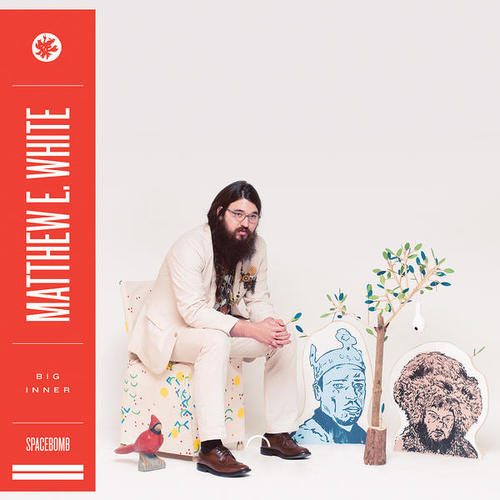

While a lot of precious music review word counts were wasted talking about the unique weird vibes of Grimes and DIIV and whatever fill-in-the-blank electronic gobbledegook artist Pitchfork was digging at the moment, talking about atypical amalgamations of “beautiful” noise that was humanity’s attempt at approximating what it would sound if two garbage compactors tried to have sex, Matthew E. White holed up in a studio in Virginia to make an equally parts secular and holy marriage of contradictions. The result is one of the most intriguing albums of the year.
                                         *****************
Matthew E. White seems almost a mystical figure in the Information Age; there’s no detailed bio, only glimmers and shadows of what made the man.  Born in August of 1982 (gleaned from an official bio that notes his arrival into the world a decade after Randy Newman’s Sail Away ) as the youngest son of ostensibly a missionary family that split time between Manila and Virginia, White’s choice of a music scene, Richmond, VA, might seem at the very least, odd, but more precisely, inspired.  Though he got his start as an avant-garde jazzman with Fight The Big Bull, his archaic framework of the netherworld of the American South; of Randy Newman’s cynical take on the characteristic longing for the Southern Glory Days, Leonard Cohen’s sacred secular poetical fury and the celebratory, exclamation marks of horn charts that would fit snug on an Allen Toussaint record make Big Inner a mature, potent, and self-assured debut.

“One of These Days” sounds like Marvin Gaye had invited Matt Berninger to sing a deep cut on Let’s Get It On and at first impression, it’s a surprising choice for album opener. Starting off in media res, like an unfinished thought out of nowhere, the temp rolls at a slow pace, with White’s inimitable half baritone, half falsetto crown. The arrangement is bare in the beginning aside from a surprisingly nimble bass line, but White’s soundscape slowly starts to build into a surprising symphony; a hot-plate guitar line here, a string section there, a triumphant horn line, and some gorgeous harmonies, all slowly piecing the song together, as if the album is waking up right in front of you.

“Big Love"grooves with a percolating bass line and a fantastic jazzy piano hook that could have found a home on a Nina Simone album. It’s an arrangement that you want to stick around for as it bounces from "Tomorrow Never Knows” territory to a loose gospel-influenced call and response.

“Will You Love Me” brings White back down to an intimate level (the pleading, barely audible vocalizations that he throws at the end of each line would leave Marvin Gaye impressed) as the drums echo a funeral march. With a chorus that quotes Jimmy Cliff’s “Many Rivers to Cross”, White’s ability as an arranger is on full display with swooning string lines and rising horn charts, transforming the platitude of “darkness can’t drive out darkness, only love can do that” into the profound.

“Gone Away” is White’s ode to a cousin who passed away, a beautiful melody with an equally expressive arrangement, there’s a sense of somber propriety in the session, letting White’s words linger in the open space, and the interweaving of the choir and string section is heartbreakingly beautiful to match White’s unanswerable plea “Why are you living in heaven today?”
                                          *****************
While there’s really no weak link on Big Inner, White saves his most powerful statement for last, “Brazos” a Southern infused epic tale of lovers, slaves who long to escape, finding powerful (and ironic) solace in Jesus. As White told eMusic:

Basically, it’s about an escaping slave couple. And the man is talking to the woman and trying to comfort her, as well as talking to himself about how shitty his situation is. He’s being introspective. I’ve tried to be as knowledgeable as I can about the civil rights movement — I think being from Virginia, you’re a little more aware of race relations to some degree. It’s just so easy to forget. We think of slavery as 300, 400 years ago, but Martin Luther King was killed in 1968, and that was not that long ago. All kinds of viciously racist behavior has happened and still happens. The tentacles are way longer than we think. As a kid who grew up in a white suburban family, I look back on pictures of, like, the food counter sit-ins, and white people are pouring ketchup and stuff on the protesters — just horrible, horrible shit. I just wanted an opportunity to be like, “Hey, if we can be more aware of this, maybe that will help a little bit.”

Part of what makes White so successful is the Spacebomb House Band, modeled on the in-house session bands of yore like The Funk Brothers and Booker T & The MG’s and Muscle Shoals. Spacebomb House Band is Pinson Chanselle (drums), Cameron Ralston (bass), Megafaun’s Phil Cook (choir arranger), and Trey Pollard (string arranger).  For all its polish, it’s endearing that White chooses to bring most of the outside efforts (string players and choir singers etc) from the Richmond area making the whole thing a down-home family affair.

It’s clear that White had many influences, though Randy Newman is the one he wears right on his sleeve with the mellow melancholy mood that drifts the listener through the album a la Sail Away. By no means an unpolished artist or performer, Matthew E. White sets the bar high on his debut album, and one that taps the secular/spiritual conundrum of the Information Age with spellbinding arrangements and music that not only meets the emotional depths of the lyrics, but extends it.  This is an album that whittles into your mind as much as it craves the open space emanating from your speakers.  There’s no undeserved bravado, no promotional gimmicks or visually dependant music videos, only the music. And we’re all the better for it.


image

Top Tracks: “One of These Days”, “Big Love”, “Will You Love Me”, “Steady Pace”, “Brazos”

Best Albums of 2012: Like Wind Blows Fire, Cheers Elephant

image

Label: Self Released/ N/A

Released: May 8th, 2012

Though their first album came out in 2008, the name Cheers Elephant isn’t likely to ring many bells, despite no lack of talent or creativity. I first heard of them through exfm, which had featured Like Wind Blows Fire as one of its many handpicked albums of the week. I immediately fell in love with their seemingly radio-ready “Peoples”, the song that leads off the album with such a strong note that you fear the rest will be a let down.  Yet as the days went by, I found myself hearing more and more of their songs through shuffling the music on my iPod, and being hard pressed to find a song I didn’t like.  Self described as a “raw, rootsy, psychedelic pop rock quartet,” Cheers Elephant really knows how to write a hook, and delivers a gorgeously produced (though not overly so) record that is sure to make listeners wonder how they haven’t heard this on the radio before.

It’s telling of the modern age of music business that Cheers Elephant decided to do it all on their own, self producing their records and selling them through Bandcamp (and iTunes with Cheers Elephant as their label) instead of through a major label (or subsidiary). With fellow bands Dr. Dog and The Roots and Clap Your Hands Say Yeah! to name a few, it’s becoming apparent that Philadelphia has it’s own burgeoning and fruitful music scene.

One of the hallmarks of successful bands nowadays is their ability to sing, especially to harmonize (Fleet Foxes, Bon Iver, Dr. Dog, Mumford & Sons, etc.) which I suppose has been true since rock really began (The Beatles, The Beach Boys, Crosby Stills Nash & Young) and Like Wind Blows Fire is full of them.  And yes, the 60’s comparisons are inevitable, but they’re also inviting, music is much easier to listen to when it’s got a good voice behind it, with phased out guitar solos to boot.  

“Peoples” really does start the album out with tremendous enthusiasm.  Whereas most songs have one hook, “Peoples” is a hook in its entirety. The opening line, the buildup to the chorus, the chorus itself, and the guitar solo/ glockenspielesque piano line that leads the outro are all ear pleasing sonic pleasures of unbridled optimism. And just tell me you don’t hear shades of a happy go lucky Springsteen in the song’s final moments.

“Doin’ It Right” pumps out a rhythm section that would make both Phoenix and The Strokes proud with it’s gleaming guitar riffs, syncopated drums and slinking vocals before bursting into the wide open bridge of Beatle harmonies and Keith Moon drumming on a bender, it’s a tidy little gem of a song that wraps up in under 3:00.

“Falling Out” brings those harmonies out front, with some deliciously weird lyrical non-sequitors like something out of Tommy’s “The Acid Queen” “because the room is completely naked and my teeth are falling out” before a technicolor guitar solo comes out of the woodwork that serves as glorious coda for the songs end.

When John Lennon went into the studio as a Beatle, he often implored George Martin and the recording staff to get an unusual aspect out of the recording, whether he wanted it to “taste like oranges” or “smell the sawdust” or, on “Tomorrow Never Knows”, beg Martin to allow him to be hung upside down on a rope so he could swing around the microphone from above, Lennon wanted an element often forgotten in today’s music, texture.  On “Leaves”,  You can almost chew on those acoustic guitars that play back and forth with the in-the-pocket drums.  Credit Cheers Elephant for entertaining all aspects of a recording; especially on a song as catchy as this one, as the chorus features quite an ear pleasing and tempo changing hook.  Once again, they stick a guitar solo onto the coda though to quite a different result, as the arrangement behind it builds to a cacophony that threatens to overtake it before dropping out again.

“Party On Darwin” on its premise shouldn’t work, with it’s vocal intro and tongue-in-cheek lyrics. Yet it boasts a wordless vocal hook that rivals The Police’s smash “Do Do Do Do, De Da Da Da” but, unlike Sting, is fully in tune with it’s irrelevance. They’re clearly having fun with this one, and it’s to our benefit that they make even the ridiculous sound catchy.

“Get Ya” features some of the best musical interplay on the album, from the rumbling drum intro, to the kaleidoscope of arrangement changes, and it’s a dynamic workout. “Thought And Commonsense” brings back the muscular arrangement of “Doin’ It Right” along with the reason the album has been deemed explicit, with one particular word choice in the lyrics.  On an album this tight, it’s hard to choose favorites, but this would fall among the top tracks of the album,  with the added presence of a horn section, one of the stronger bridges on the album as well as some surprising gender-bending lyrics.

And how about those harmonies on “Little Dog”? Starting out as a rustic acoustic jaunt, this song opens up into Wall of Sound harmonies, and a twist on the love song lyrical staple. It’s really the vocals that are on display here, rivaling Fleet Foxes at their most bombastic, but none of the self-righteousness.

“Like Wind Blows Fire” might be the song I like least on here, but only because it hasn’t tracked up as many listens as the rest of the album. Lyrically, it’s a clever turn of the phrase, expanding on how a liar causes as much harm like wind blowing fire, and there’s some nice studio trickery on here as well.

“Balloon In The City” is the album send off, and quite an artistic music video with it (which you can check out below) but at its heart, it’s the biggest ballad on here, with a catchy acoustic hook and some spacey synthesizer work in the distance and an overall dream-like quality with the warm vocal harmonies that sound like they’re coming from another room. A nice relaxing way to end the album, and on a very strong note.

You might not find Like Wind Blows Fire as a ubiquitous result to many Best of 2012 Album lists, but it just goes to show how much quality music is out there. Cheers Elephant deserves a lot of credit on this one, being a self-release that sounds so professionally produced, and so gorgeously detailed. While they may not have the fame of fellow Philadelphia bands like Dr. Dog, their time is sure to come, and when it does, fans will have a hard time finding a better album of 2012 then the one found here. Why this album didn’t find Top 40 radio play was not for a lack of goods, but a constant reminder that music, as a business, does not always find quality.  So Cheers to Cheers Elephant for putting up the good fight, and producing an album they wanted to produce. For an indie-rock/pop/psych rock / whatever you want to call it album, this is one of the most enjoyable that I’ve heard in a long time.

“Balloon in the City” Video:

Top tracks: 

“Peoples”, “Doin’ It Right”, “Leaves”, “Thought and Commonsense”
 

Grab Like Wind Blows Fire on Bandcamp

Modern Classic Albums: Lonerism, Tame Impala (2012)

Released: October 9th, 2012

Label: Modular/ Modular Recordings 

Music at its most powerful can be poetic, or completely transformative. Poetic in the sense that it reaches deep down into the human psyche and exposes our passions, our hopes, our discontent, our heartbreak. What makes music transformative is when it shifts all that comes before it to create a new experience, a new world that people can inhabit with one sense to create all of them.  By this standard, Lonerism, Tame Impala’s latest LP exhibits both.

It is important that I address that music is never of a complete vacuum; The Beatles Sergent Pepper’s Lonely Hearts Club Band was an album that owed to The Beach Boys Pet Sounds as well as music of old dance halls “When I’m Sixty-Four” the emergence of counter-culture psychedelia “Lucy In The Sky With Diamonds”, indian mysticism “Within You Without You”, even the trend of old style traveling band names that had become popular like Country Joe and the Fish “Sgt Pepper’s Lonely Hearts Club Band” . It was the synthesis of all these elements that made it such a powerful album.

One of the most intriguing, and mind-blowing songs on that album is the previously mentioned “Lucy In The Sky With Diamonds”. In a time where psychedelic music rarely tried to define anything more than the here and now, often weakening their effect by relying on a decidedly unholy grouping of odd sound effects (a process that significantly dates most psychedelia of the time). Rather, “Lucy” decided to create a whole new world, a new language of intense imagery that left an indelible mark on the listener, bringing them to a surreal world that nonetheless seemed real.  

In todays music world, it is nearly impossible to identify a band in the context of The Beatles success. It won’t be repeated, the musical world is too vast and populated for one band to dominate, but that doesn’t deny a band’s ability to be transformative.

One might shoehorn Tame Impala into the “revivalist” trend, the phenomenon in modern music that found bands like Dr. Dog popular (at least in the indie realm) for being faithful to 60’s music archetypes, being pleasurable because they sound like bands that have come before but with enough subtlety to sound of their own.  But psychedelic rock is too much of a misnomer for a band to truly be “revivalist” in that sense.  Yet when Tame Impala’s first LP, Inner Speaker came out, musical critics and listeners alike had no better context to identify what they were hearing.  There was abundant flange, the analog booming sounds of drums that were more loud than crisp, bright vocals that bounded with a “Leslie” rotating speaker effect, but it still felt weak, a lovingly made copy that was too dependent on replicating the garage-psychedelic sound.

Then, there’s Lonerism. “Be Above It” is quite an opening statement. a single line of “gotta be above it, gotta be above it” melds into the syncopated rhythm of a drum beat, off hand guitars bubble in the background before Kevin Parker’s eerie vocals flutter in, eerie in it’s similar timbre to John Lennon, that repeats the mantra of self-reliance “And I know that I gotta be above it now/ And I know that I can’t let them bring me down”. It’s repetition is not so much ingratiating as it is identifying. But even that cannot quite prepare you for “Endors Toi”

French for “You Sleep”, Parker begins to establish the dream landscape that will dominate the overall sound on the album. Beginning with a wavy guitar thats bolstered by a sirenesque synth line and a spiraling keyboard part, the song practically explodes into Technicolor by its fantastic drum line. There’s some fantastic guitar melodies packed in here as if the Jimi Hendrix Experience was back from the dead.

“Apocalypse Dreams” is the first song that begins to take on a traditional structure led by a marching drum beat and a compressed piano line and its a highlight in an album full of them.  While The Beatles film Magical Mystery Tour is making its re-release rounds, it’s really Lonerism that lives up to that billing

What’s perhaps most astounding is that Kevin Parker by and large handles all the instrumentation on the album by himself, but rather than have a result that bleeds ramshackle home-spun indie charm (a la Ram) Parker sounds like a full band at the peak of their powers. Though the comparisons to Lennon are unavoidable, Parker’s melodies are more reminiscent of his partner, McCartney. Take “Mind Mischief” which features a guitar lick that could have easily been a McCartney outtake, but harmonies that sound like Lennon and McCartney are back together again, it’s quite disarming.  If Lennon had continued to express his more psychedelic side and stayed with McCartney, this might be the closest thing we have to imagine it.

It’s refreshing that Parker is able to create these ear-catching melodies almost out of nowhere. Sure, they won’t be leading a top 40 song anytime soon, but they aren’t contrived, they don’t try to sound massive.  

If there were any doubts of Tame Impala’s love for 60’s psychedelia, look no further than their latest video for “Feels Like We Only Go Backwards”
 

Kevin Parker is doing what few could attempt to do. Not only has he faithfully picked up from where The Beatles psychedelia left off, but he’s created a whole world within it.  For a man who is so intensely private, his music doesn’t spiral off into self interest, it doesn’t indulge in selfish tendencies, it sounds like the concerted effort of a group.  He’s not afraid to express his own doubts either, as the central theme of the album is loneliness and escapism, which are perfect thematic backdrops for psychedelic arrangements.  

Top Tracks:

Endors Toi

Apocalypse Dreams

Feels Like We Only Go Backwards 

Bottom Line:

Lonerism is a massive undertaking expanding psychedelia into a valid form rather than just “revivalist” for its own sake.  Parker at once manages to sound both solitary (in his lyrics, which are quite poetic at times) and part of a collective (playing all of the instrumental parts save a couple of keyboards) . Even if it weren’t home-recorded, it’s one of the strongest albums of 2012, that it is makes it even more impressive. A must buy

Find it here:

Insound (Vinyl) 

iTunes (Digital)

Further Reviews:

Allmusic

Any Decent Music?

The Guardian

Pitchfork 

Review: Life’s A Gas, The Tins, (2012)

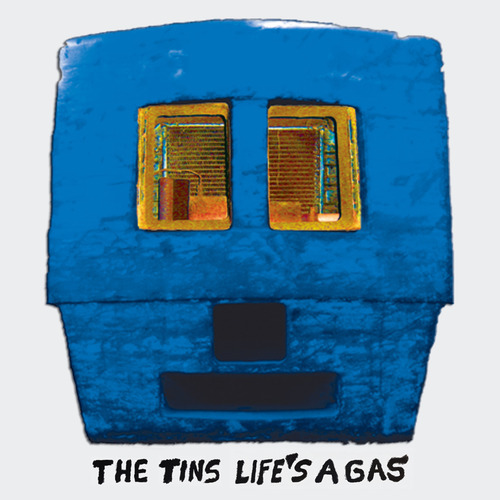
I first heard of The Tins when I came across “Backbone”, a joyful concoction of Weezer’s stadium rock of the 1990’s and popcraft of the 1980’s. I was immediately hooked and un-sated by their only release, The Tins EP , and I wanted more. All the while, The Tins maintained a personal relationship with their fan-base, announcing a Kickstarter campaign to finance their debut album wherein they offered prizes from a modest thank you on their Facebook page, to playing a private show for the donor, to even offering their tour van as compensation (that specific offer was never taken).  Sweet touring van aside, The Tins more than delivered on their first LP, officially out today featuring cuts that exemplified their backbone of 1980’s pop meets 1990’s stadium rock, as well as a few songs that show them heading in a new direction.

“Hit and Miss” begins the album with a snyth-driven hook and an emphatic back beat that builds the song to an energetic crescendo, and it’s all around a strong anthem. The Tins follow the song with a startling change of pace in “We Fought The Moon”, a cut with a startlingly melodic slow hook that finds the band in fine territory in between Modest Mouse (particularly the vocals and syncopation) and Weezer in the fuzzy rock arrangement. “Taking Liberties” could be a lost single from The Monkees with it’s 60’s garage rock organ lines and close-knit harmonies, and it features a nice little Bo Diddley bridge. Meanwhile, “Spies” propels forward with a hook that would have made The Cars proud.  It’s a strong introduction for the album, but perhaps even more surprising is how the second half is even better.

“Vicki” had been released earlier as the album’s first single and it deserves mention as one of the album’s stand out tracks.  It seduces you with that warm and fuzzy 80’s pop vibe, while the lyrics tell a story of “a virgin with the urges” . The accompanying music video is fittingly dark, dead bodies stack up as zombies begin to pick off the band.  While it could be interpreted as commentary on teenagers whose main desire is nothing but having fun and trying to have sex, it’s clear that The Tins are having fun, though few could make this dark humor sound so good.  When “Midnight Crowd” first came onto my speakers, my roommates wondered how they hadn’t heard this Shins song before, and although it’s a bizarre change in arrangement, a more organic and acoustic affair, The Tins trademark anthemic hook is still there in the chorus and far from being derivative, The Tin’s make what could be just a shameless rip-off into a good what-if jump off point for where the band could go with their sound, it doesn’t hurt that they manage to sound more like The Shins of Oh, Inverted World than The Shins have in years.

The Tins begin another dark tongue in cheek tale with “Shozo Hirono” which wraps a ne’er do well tale about a murder with more enthusiasm than a Cormac McCarthy novel as the narrator spirals into confusion.  The instruments swell with climactic psychedelic vigor before a descent into white noise, and the end of the narrator’s story (and life?).

“Colors” brings back the Modest Mouse off beat drumming syncopation, and one of the album’s more dynamic hooks and it’s a nice transition between “Shozo Hirono” and the next track “Please Be Kind” which sounds like The Cars and The Clash had a baby, and that’s a good thing, the track flutters and whirs with a funky bass line, propulsive drumming and fantastic guitar interplay. If “Midnight Crowd” and “Please Be Kind” are indicative of where the band could go moving forward, I’m even more excited for their sophomore effort than I was of their debut.  

“Halo” is a story of a love gone wrong, and it has a fascinating build in terms of instrumentation and hooks a plenty, and it helps close out the album along with “Whiteout” on a strong note, with “Whiteout” being their strongest take on the Modest Mouse sound.

While in many cases, sounding like another band is damning praise, The Tins don’t sound like they’re trying to cash in or out of ideas, they just want to pay homage to their influences. Also, as a debut LP, with only a single EP to their name, they’re amazingly polished and cohesive, this is a band that can write anthemic pop rockers and intricate syncopated indie rock with an equally strong footing. If anything, this is a band to keep an eye on, and it’s a great debut.

RIYL: The Shins, The Cars, Modest Mouse, Weezer

Grab Life’s A Gas on Bandcamp